AI Image Generators
Explore top AI image generators that create stunning visuals from texts or concepts effortlessly.

In the rapidly evolving world of digital creativity, AI image generators have emerged as game-changers. Gone are the days when creating stunning visuals required advanced skills and expensive software. Today, with a few clicks, you can conjure breathtaking artwork, realistic portraits, or imaginative landscapes using just text prompts.
This technology has grown in sophistication, transforming from simple tools into powerful creative partners. What was once a novelty is now an essential asset for artists, marketers, and anyone looking to enhance their visual storytelling.
I've spent time exploring various AI image generators to determine which ones stand out in a crowded marketplace. From those that excel in realism to others that delight in abstraction, there’s something for every creative need.
If you're eager to elevate your visuals and streamline your design process, let’s dive into the top AI image generators currently making waves. Your next masterpiece might just be a prompt away.
The best AI Image Generators
-
1. Magnific (Freepik) for creating custom graphics and illustrations.
-
2. Photoroom for creating unique visuals with ai backgrounds
-
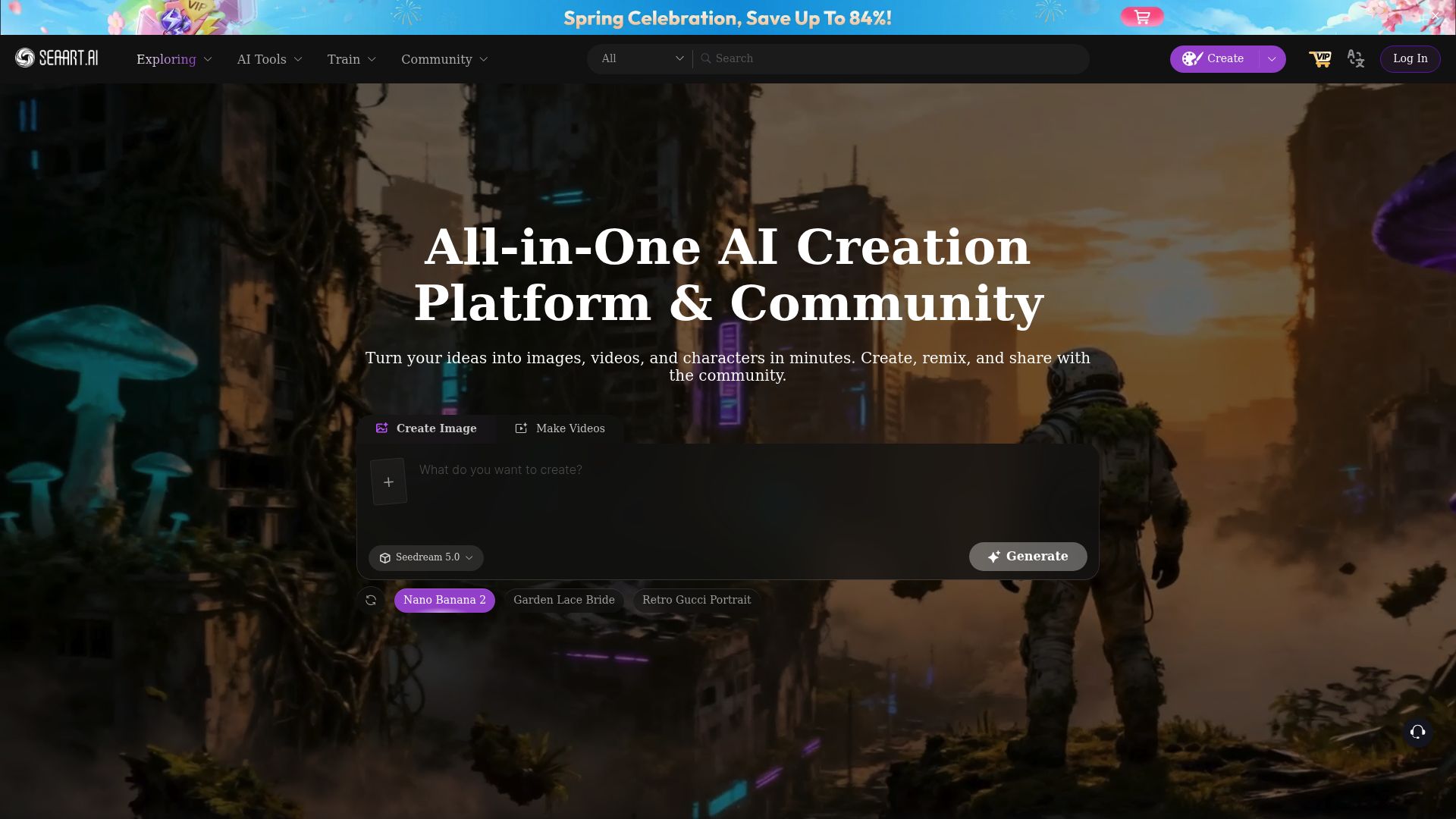
3. Seaart.ai for artistic illustrations for creative projects.
-
4. Leonardo AI for game art creation
-
5. Pixlr for artistic ai image creation
-
6. Adobe Firefly for dynamic artwork creation made effortless.
-
7. Midjourney for artistic concept visualization
-
8. Remaker for custom visuals for social media posts
-
9. Mage for personalized art creation at no cost.
-
10. Topaz Labs for upscale ai-generated images
-
11. Recraft for create cohesive brand visuals effortlessly.
-
12. PixelBin for dynamic image generation with instant edits.
-
13. AILab Tools for artistic style transfer
-
14. Skylum for quick image enhancements using ai
-
15. Evoto for photoshop alternative
How do AI image generators work?
When you search online for AI image generators, you'll encounter a plethora of tools, many boasting similar capabilities. This similarity often stems from their reliance on the same foundational models, like diffusion models or generative adversarial networks (GANs). Most tools act as interfaces to these complex algorithms, enhancing them with user-friendly features while shrouding the underlying technology in marketing jargon.
At the core, AI image generators operate using detailed prompts provided by users. Once a prompt is entered, the model processes the input and generates images by predicting pixel values based on patterns learned from extensive datasets. These datasets usually comprise millions of images, which include various styles, subjects, and artistic influences, enabling the models to produce highly varied and detailed results.
The training process for image generation involves analyzing countless images and their associated textual descriptions. This allows the models to understand relationships between words and visual features. The result is a sophisticated network that can create visually coherent images that reflect the nuances of the input prompt, whether it’s a realistic scene or an abstract concept.
Many popular applications integrate these image generation capabilities, enhancing creative tools like Adobe Photoshop and Canva. These companies partner with major AI developers, utilizing powerful models rather than building their own, thus enabling users to easily create custom visuals without needing extensive technical expertise.
For those interested in hands-on experimentation, various platforms allow users to craft unique images through intuitive interfaces. Some even permit adjustments to style and content, empowering artistically inclined individuals to innovate without starting from scratch.
In summary, AI image generators blend advanced algorithms with vast datasets to transform textual prompts into compelling visuals. As these technologies evolve, their ability to produce impressive artwork continues to expand, encouraging both creativity and exploration in digital artistry.
Our best AI image generators at a glance
| Rank | Name | Best for | Plans and Pricing | Rating |
|---|---|---|---|---|
| 1 | Magnific (Freepik) | creating custom graphics and illustrations. |
N/A |
0.00 (0 reviews)
|
| 2 | Photoroom | creating unique visuals with ai backgrounds |
Paid plans start at $7.50/month. |
4.74 (38 reviews)
|
| 3 | Seaart.ai | artistic illustrations for creative projects. |
N/A |
0.00 (0 reviews)
|
| 4 | Leonardo AI | game art creation |
Paid plans start at $9/month. |
4.73 (11 reviews)
|
| 5 | Pixlr | artistic ai image creation |
Paid plans start at $0.99/month. |
4.73 (11 reviews)
|
| 6 | Adobe Firefly | dynamic artwork creation made effortless. |
N/A |
4.67 (6 reviews)
|
| 7 | Midjourney | artistic concept visualization |
N/A |
4.73 (11 reviews)
|
| 8 | Remaker | custom visuals for social media posts |
N/A |
4.69 (13 reviews)
|
| 9 | Mage | personalized art creation at no cost. |
N/A |
4.00 (5 reviews)
|
| 10 | Topaz Labs | upscale ai-generated images |
N/A |
4.70 (10 reviews)
|
| 11 | Recraft | create cohesive brand visuals effortlessly. |
N/A |
4.67 (3 reviews)
|
| 12 | PixelBin | dynamic image generation with instant edits. |
N/A |
4.75 (8 reviews)
|
| 13 | AILab Tools | artistic style transfer |
N/A |
4.84 (25 reviews)
|
| 14 | Skylum | quick image enhancements using ai |
N/A |
4.75 (24 reviews)
|
| 15 | Evoto | photoshop alternative |
N/A |
4.83 (12 reviews)
|
127 Listings in AI Image Generators Available



Photoroom pros:
- Affordable and efficient
- Turns home into a professional photo studio
Photoroom cons:
- May not justify value for the money considering the available features and pricing
- Limited AI Capability compared to other tools in the industry
Photoroom Pricing
Paid plans start at $7.50/month and include:
- AI background image generator
- AI-enabled tools
- Batch Mode
- Edit multiple images simultaneously
- Export and save designs without limitations or watermarks
- Access to other AI-enabled tools



Leonardo AI pros:
- Revolutionizes the way creatives generate production quality assets
- State-of-the-art AI algorithms for high-quality asset generation
Leonardo AI cons:
- No specific cons or disadvantages mentioned in the provided documents
- No cons found in the provided documents.
Leonardo AI Pricing
Paid plans start at $9/month and include:
- Up to 5 concurrent generations
- Alchemy
- Prompt Magic v3
- PhotoReal
- Motion
- Train models with API credits
- Purchase additional API credits to continue using the API


Pixlr pros:
- Great photoshop alternative
- Best for design
Pixlr cons:
- There are no cons listed in the provided documents.
- No specific cons mentioned in the provided documents.
Pixlr Pricing
Paid plans start at $0.99/month and include:
- Ad-Free
- Unlimited saves
- 80 monthly AI Credits


Adobe Firefly pros:
- Instant creative building blocks
- Astounding video edits, simplified
Adobe Firefly cons:
- Adobe Firefly lacks detailed information on the cons or drawbacks of using it. Further information on user reviews or comparisons with similar AI tools would be needed to identify specific cons.


Midjourney pros:
- Advancing imaginative powers of the human species
- Focused on design, human infrastructure, and AI
Midjourney cons:
- No specific cons of using Midjourney were found in the document.
Midjourney stands out as a powerful AI image generator that specializes in turning textual prompts into stunning visual artwork. Unlike traditional image-editing software, Midjourney leverages advanced algorithms to interpret user input and create unique, high-quality images that often push the boundaries of imagination. This tool is particularly favored by artists and designers looking to explore new creative avenues.
The interface is user-friendly, making it accessible for both novices and experienced users. Midjourney operates primarily through Discord, where users can interact with the bot by sending prompts. This community-centric approach not only fosters creativity but also allows users to share their creations and gain inspiration from others.
One of Midjourney's standout features is its ability to produce diverse styles and artistic interpretations based on the prompts provided. This flexibility encourages experimentation, as users can adjust their input to evoke various moods, concepts, or artistic styles. The results can be both surreal and mesmerizing, making it an invaluable tool for anyone in the visual arts.
While Midjourney excels at quality and creativity, it's worth noting that the output can sometimes lean towards the abstract. This aspect may appeal to some users while leaving others desiring a more realistic approach. Nevertheless, the platform fosters a unique creative space that encourages artistic exploration and innovation.
For those who are serious about their digital artwork, Midjourney offers subscription plans tailored to different needs, including dedicated support and higher resolution images. This investment in quality makes it a go-to option for professionals and enthusiasts alike who want to elevate their creative projects.


Remaker pros:
- Free online tool
- Easy head replacement
Remaker cons:
- Specific cons of using Face Swap By Remaker could not be retrieved from the document.
- No video support


Mage pros:
- AI-Powered Art Creation
- Customizable Control Networks
Mage cons:
- No cons or limitations were identified for using Mage
Mage is an innovative platform dedicated to enabling users to create unique images and videos effortlessly, leveraging the capabilities of Stable Diffusion at no charge. With its intuitive interface, Mage allows for a wide range of customizable options, catering to various visual styles such as art, photorealism, and anime. A standout feature is the 'Create Privately' option, which ensures that user creations remain confidential. Additionally, Mage provides flexibility with settings to adjust control nets, aspect ratios, and other parameters, allowing for personalized outputs. Users can freely generate as much content as they desire, making Mage a versatile tool for artists and enthusiasts alike.


Topaz Labs pros:
- Maximizes image quality
- Effective noise reduction
Topaz Labs cons:
- Expensive
- Requires 16GB RAM minimum


Recraft pros:
- Create both vector and raster images that are anatomically perfect
- Maintain consistent brand style
Recraft cons:
- Outperformed by other AI tools in Challenges like Complex, Imagination, and Style & Format
- Professional designers may not have much control over image generation and style outputs, resulting in inconsistent output


PixelBin pros:
- Bulk image upload
- Real-time image optimization
PixelBin is a cutting-edge AI-driven image optimization tool designed for businesses that prioritize efficiency and performance. It boasts a variety of essential features, ensuring images are not only optimized for quality but also delivered quickly. With capabilities like bulk image uploads and real-time transformations, PixelBin significantly streamlines the image management process.
The tool’s centralized image repository and CDN integration further enhance its appeal, reducing load times and ensuring mobile-friendly delivery. Developers will appreciate the user-defined custom workflows and robust SDK integrations, making it a versatile choice for technical users.
While PixelBin excels in optimization, it does have its limitations. The absence of image editing features and support for GIFs may disappoint some users. Additionally, its lack of collaborative tools and multi-language support could deter teams looking for a more comprehensive solution.
Overall, PixelBin stands out as a powerful optimization tool, especially for those focused on image quality and performance. However, it may be less user-friendly for non-developers, so businesses should weigh their specific needs before diving in.


AILab Tools pros:
- Black and white image colouring
- Sharpness enhancement
AILab Tools cons:
- Inadequate free version
- Lack of advanced user features


Skylum pros:
- Luminar Neo represents a cutting-edge photo editing solution driven by advanced artificial intelligence.
- The tool automates the editing process, saving time and delivering professional-quality results.
Skylum cons:
- No specific cons listed in the provided document.
- No specific cons or missing features were found in the document.


Evoto pros:
- Speed and Efficiency: Evoto processes thousands of images at a speed 10 times faster than conventional methods while maintaining high quality.
- Facial Retouching: Advanced AI algorithms for detecting faces, estimating age and gender, and creating perfect skin by removing blemishes.
What makes the best AI image generator?
In the evolving landscape of AI, image generators stand out for their creative potential, and several factors influence what makes an image generator truly exceptional. High-quality output is obviously crucial, but beyond that, there are other elements that can elevate the user experience.
A dedicated focus on image generation is vital. While various applications can create visuals, tools tailored specifically for image generation streamline the process. These platforms should have unique features that enhance creativity and output, ensuring they're not just repackaging standard APIs.
User control is another important aspect. The best image generators empower users to manipulate parameters like style, color palette, and subject matter. The ability to collaborate with the AI—rather than just pressing a button—is key to producing images that closely align with creative visions.
Simplicity and ease of use are paramount. Users shouldn’t have to wrestle with overly complicated interfaces. A user-friendly design allows for intuitive navigation, enabling creators to focus more on their artistic process than on figuring out how to use the tool effectively.
Affordability matters, especially in a market filled with options. While some AI generators boast premium features, they should justify their price points with tangible benefits. Fortunately, many effective image generators offer competitive or free options that deliver impressive results without breaking the bank.
Finally, the ethical considerations of image generation illustrate its importance. The best tools are built to avoid generating harmful or misleading content. Staying away from anything that promotes disinformation or exploits copyright laws reflects a commitment to responsible AI usage.
With these criteria in mind, each image generator must be evaluated closely. Many tools may look similar at first glance, yet a deeper examination reveals significant differences in their features, user experience, and overall effectiveness. Ultimately, it’s the combination of these elements that distinguishes the best AI image generators from the rest.
How I selected the best Image Generators
Ranking and Scoring Methodologies
Our AI tool rankings are based on a comprehensive analysis that considers factors like user reviews, monthly visits, engagement, features, and pricing. Each tool is carefully evaluated to ensure you find the best option in this category. Learn more about our ranking methodology here.
For this update, I focused solely on image generators that are actively being developed and showing significant improvements. The rapid evolution of this technology necessitates that I highlight tools that are not only current but also agile in adapting to new trends and capabilities. My evaluation criteria were carefully considered as I explored various options online.
First and foremost, I examined the quality of the images produced. An effective generator should deliver images with high resolution and intricate detail that align with the user's expectations.
Next, I assessed the user experience. This encompasses everything from the interface's intuitiveness to how straightforward it is to input ideas and receive results. A seamless interaction is essential for any creative tool.
Additionally, I looked for features beyond simple image creation. Some generators offer the ability to add filters, enhance images, or even incorporate text. These extra tools can significantly enrich the creative process.
I also paid attention to integrations with existing platforms or software. Whether it's combining with design apps or facilitating export to various file formats, compatibility can make a generator more useful in a practical context.
Finally, I considered any unique functionalities that enhanced the overall experience. Whether it’s style transfer capabilities, multi-language support, or community sharing options, these elements can elevate a basic generator into something special.
After thorough research and experimentation, I’m excited to share the top image generators that stand out in today’s creative landscape. Enjoy exploring them!
Related Categories
- 3D Model Generators
- AI Portrait Generators
- Art Generators
- Avatar Makers
- Background removers
- Character Chat Tools
- Deepfake Makers
- Design Generators
- Drawing Generators
- Headshot generators
- Image Enhancer & Upscalers
- Image Generators
- Infographics Tools
- Interior Design Tools
- Outfit Generators
- Photo Editors
- Photographers Tools
- Product Design Tools
- Story Generators
- Text To Image Tools